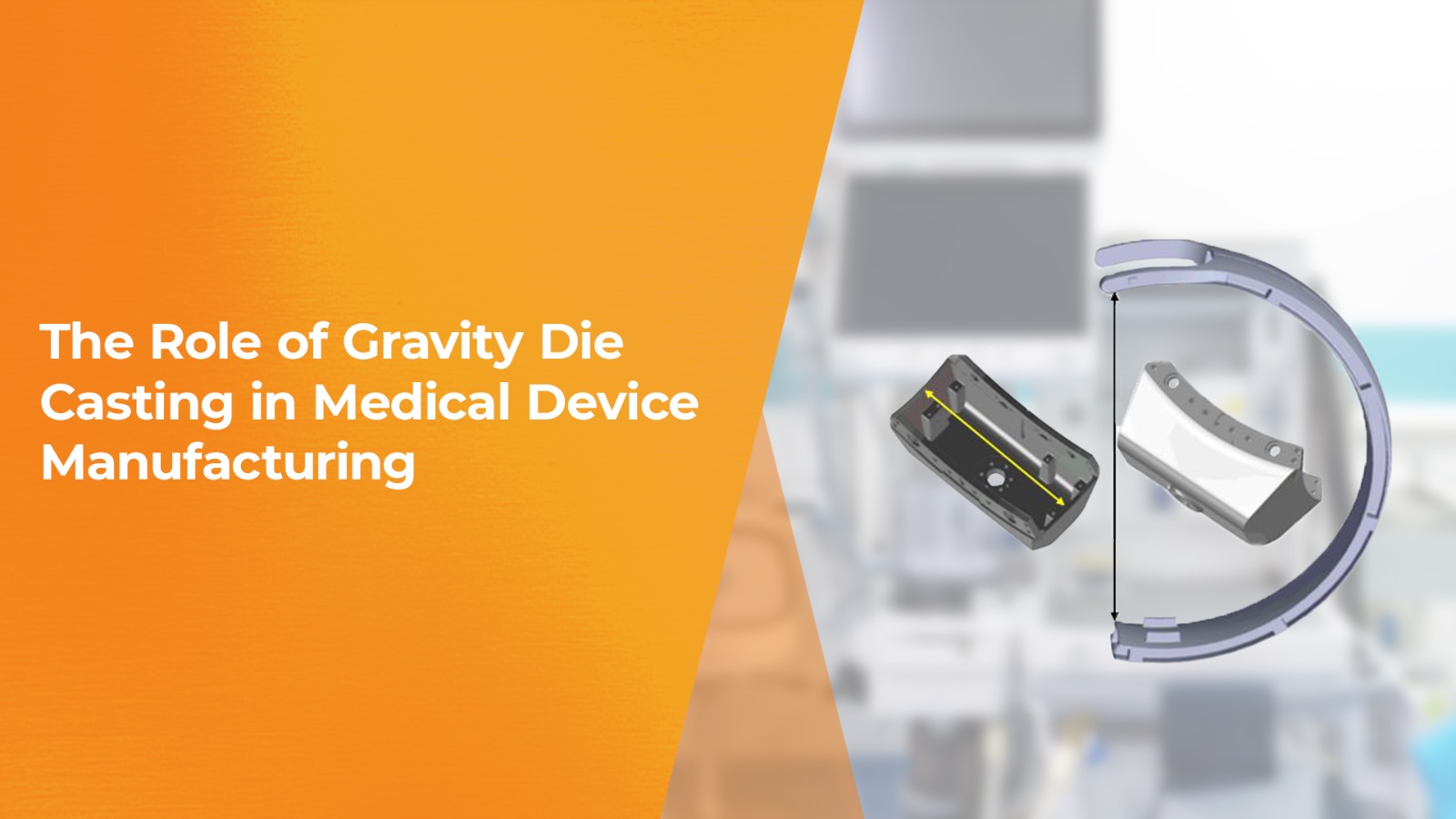
The Role of Gravity Die Casting in Medical Device Manufacturing
As the medical device manufacturing landscape rapidly evolves, the demand for highly engineered precision components is increasing. With an increase in technological advancements in both materials, processes, and manufacturing techniques, companies are increasingly looking to utilize methods such as Gravity die casting to achieve their goals. Gravity die casting is an important manufacturing advancement that produces components that are both robust and precision-engineered to meet the standards of the healthcare industry.
Gravity die casting is one of the most effective and reliable manufacturing methods for producing complex metal parts in the medical device manufacturing process. This article will focus on the mechanics of Gravity die casting, its significance in the medical device manufacturing process, and why Gravity die casting is increasingly becoming an adopted methodology for creating medical devices that are higher performing. We will also highlight precision casting as a component of Gravity die casting and how it enhances quality and functionality in medical components.
Understanding Gravity Die Casting
Gravity die casting is a kind of metal casting method that utilizes Gravity to pour heated molten metal into a reusable die. The molten metal fills the cavity of the die or mold and cools to a specified part shape. This process is generally utilized to create complex metal parts with high tolerances, which makes it a useful process for medical device components.
A wide variety of metals can be utilized in die casting, for instance, aluminum, copper and zinc alloys. Specific metals are chosen based on the device material specifications, for example, resistance to corrosion, strength, and lightweight, which are all very important for medical devices.
In die casting for medical devices, Gravity die casting offers several advantages:
1. Precision: This process allows for precise and tight tolerances in the manufacturing of each part so that it fits nicely within a larger system.
2. Strength and Durability: Parts created through this process have proven strength and are suitable for medical devices that encounter wear and tear in critical medical applications.
3. Affordability: Gravity die casting can be more economical than other casting methods, especially if medical devices are produced in large volumes.
The Role of Gravity Die Casting in Medical Device Manufacturing
The medical industry is extremely regulated and thus requires any equipment used within it to conform to strict requirements governing safety, reliability, and performance. From surgical instrumentation and diagnostic equipment to implants, precision at every step is significant. Gravity die casting offers a method that ensures both accuracy and efficiency, making it a go-to solution in medical device manufacturing. A few of the specific areas in which Gravity die casting is useful to the medical device industry are:
1. Production of Complex Shapes: Many medical devices require parts that have complex features or designs. Gravity die casting allows for complex shapes to be manufactured, which would prove both difficult and expensive to manufacture otherwise. Gravity die casting can create lightweight casings for electronic medical devices or structural components for implants, with high precision.
2. Consistent Quality: The medical field expects consistency in quality across all parts. Die-cast components for medical devices provide the benefit of repeatable quality, which means that every batch of parts will follow the original specifications. Considering that devices must function properly and reliably for the length of their intended life, this is an important quality control feature.
3. Material Selection and Durability: The Gravity die casting materials, such as aluminum or zinc alloys, are lightweight yet durable, and provide long-term solutions for medical devices, which are typically used in a severe environment that involves high stress, sterilization, and corrosion.
4. Quick Turnaround and Cost Effectiveness: In a competitive industry such as manufacturing medical devices, how quickly and how much is a critical part of the scenario. Gravity die casting will provide a faster turnaround than other casting methodologies, especially in mass production. Additionally, the molds are reusable, which allows for reduced production costs and creates a more economical solution for manufacturers.
Precision Casting in Medical Devices
Precision casting is an important part of Gravity die casting and involves producing parts with extremely tight tolerances. This is particularly important in the field of medical device manufacturing. Whether it be a micro-component utilized in a surgical instrument or a frame for a complex prosthetic device, it ensures that the parts will fit perfectly together and reproduce a given quality, performance, and safety standard.
Clearly, precision casting aids not only in the functionality of a medical device but also reduces the need for post-processing. Parts made using precision casting will require little or no machining, thus protecting cost and time efficiencies.
For example, for orthopedic implants, precision casting of parts will allow a degree of accuracy in components that fit a particular anatomy. These details are relevant for ensuring an accurate fit for functionality and to avoid complications before, during, and after surgery.
Applications of Gravity Die Casting in Medical Device Manufacturing
Gravity die casting has widespread usage in several medical device applications. Among the most common functional applications are:
1. Surgical Instruments: Dimensions-restricted, lightweight surgical instruments with precision-engineered components manufactured from durable materials are required in many surgical fields. Gravity die casting provides precise parts for surgical instruments to ensure mechanical and inert standards are achieved for any surgical procedure.
2. Diagnostic Equipment: Many commercial diagnostic instruments, such as imaging machines or bench test equipment, contain multiple metal components that often need to be designed for specific criteria of strength and integrity. Gravity die casting is frequently capable of producing the precision needed for these components.
3. Implants and Prosthetics: For implant products, including many articulated joint prostheses, Gravity die casting allows for the reproduction of parts that are durable yet accurately shaped to fit the human body. This precision helps improve the performance of implanted prosthetic devices.
4. Medical Device Housing: Finally, medical devices typically require housings made from metallic alloys to safeguard electronic components. These casings must be designed to be lightweight, durable, and meet the criteria to withstand potential or extreme environmental conditions. The die casting process is an ideal solution for these metal components.
Advantages of Gravity Die Casting in Medical Device Manufacturing
Gravity die casting has several unique benefits, lending itself to becoming a popular avenue in the manufacture of medical devices:
1. Cost-Effective: Because the molds can be reused and multiple parts can be processed at the same time, die casting for medical devices is an economical manufacturing process, especially in larger production runs.
2. Precision and Accurate Manufacturing: Gravity die casting allows for precision and accuracy. This is important in the manufacture of parts that will be made to very tight tolerances, assuring the part fits properly and performs correctly.
3. Material Flexibility: The implement can be made from many compatible materials, from lightweight metals like aluminum to heavier alloys, thus providing manufacturers with more options for their exact requirements.
4. Sustainability: Both the durability of the mold and the very little waste of material in the production process allow Gravity die casting to be compared favorably to alternative production methods.
Conclusion
Gravity die casting plays a vital role in the production of medical devices. Its capacity to create accurate and long-lasting components swiftly and economically makes it a favored technique for crafting intricate parts needed in healthcare. The precision involved in this casting method ensures high-quality outcomes, while its adaptability regarding material selection further solidifies its status as an essential process in developing advanced medical devices.
As the need for sophisticated medical technologies continues to rise, Gravity die casting will likely remain integral to the industry, equipping manufacturers with the ability to produce safer and more dependable devices. This method is valuable across various applications, including implants, surgical tools, and diagnostic instruments.