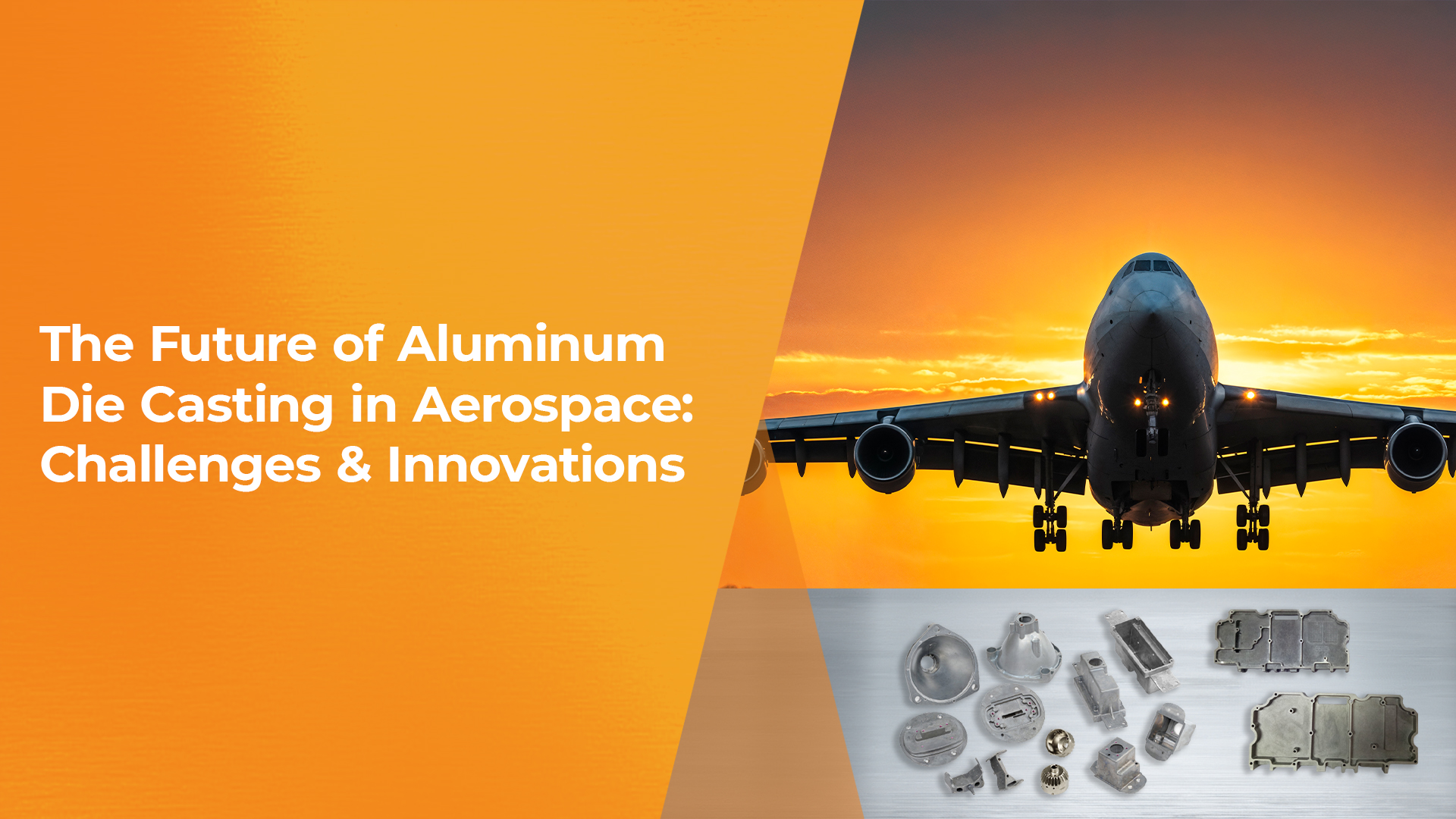
The Future of Aluminium Die Casting in Aerospace: Challenges & Innovations
Aluminum die casting is a vital process in aerospace that yields strong, lightweight, and complex components. As the aerospace sector rapidly evolves, the need to improve efficiencies and costs is growing. In particular, aluminum die casting for aerospace is growing thanks to precision and strength at lower weights. Weights. In this article, we'll explore the future of aluminum die casting in aerospace, examining the challenges the industry faces and the innovations transforming the way aerospace die casting is approached.
What is Aluminum Die Casting?
Aluminum die casting is a manufacturing process where molten aluminum is injected under tremendous pressure into a mold or cavity to create a detailed and durable part. Aluminum die casting is known for its precision, making it a good manufacturing option in industries where precision counts, such as the aerospace industry. Aerospace die casting parts use aluminum die casting due to its unique value in providing a combination of high strength, light weight, and corrosion resistance, which is critical for reliability in extreme environments and conditions.
The Growth of Aerospace Die Casting
The aerospace sector has long been adopting aluminum die casting, but the growth of this demand is accelerating because of certain elements. Demand for lightweight materials, better fuel efficiencies, and modernizing manufacturing technologies all lend themselves to greater usage of aluminum die casting applications. A die-cast part can endure the stresses of flight while also offering the manufacturer a less expensive production solution than machining.
The advantages of using aluminum die casting in the aerospace sector can assist in the production of engine components, structural parts, and complex designs, all of which are necessary components in many aspects of aircraft design. As the aerospace industry strives for lighter, stronger, and more efficient parts, die-cast aluminum parts continue to play a pivotal role in meeting these needs.
Challenges in Aluminum Die Casting for Aerospace
The use of aluminum die casting in aerospace has developed into a more efficient means of manufacturing, but it is not without its difficulties. Identifying difficulties that we face and potential solutions will help to advance the aluminum die casting process in aerospace.
1. Quality Control and Defects
As manufacturers move toward precision aluminum casting for aerospace applications, accuracy is required, but achieving that level of precision can be difficult. Defects that are related to material conditions, such as porosity, shrinkage, and cold-shuts, can negatively affect the parts' strength and lead to possible failure of the parts. Quality control is a necessity throughout the process after a part has been designed.
2. Complexity of Designs
Modern aircraft demand very complex parts with advanced geometries. Aluminum die casting is capable of such designs, but it further complicates the tooling and mold creation process. One of the continuously changing challenges in the industry is designing molds that address the cost curve of creating repeated high-quality parts.
3. Material Properties and Performance
Aerospace components are subjected to harsh conditions, so the material properties of die-cast aluminum parts need to be accurately determined. The aluminum alloy must perform in extreme temperatures, pressures, and environmental conditions. Developing aluminum alloys that will provide similar lightweight performance and survive those harsh conditions is the challenge.
4. Cost Efficiency
While aerospace die casting offers a more affordable alternative to machining for specific components, the process itself is not without significant upfront costs. The cost of molds, tools, and machinery can be substantial, especially when producing smaller quantities of highly specialized parts. For many aerospace companies, balancing the upfront investment with long-term production savings remains a challenge.
Innovations in Aluminum Die Casting for Aerospace
As we look to the future, prospects for aluminum die casting in aerospace appear favorable. As technology continues to develop, manufacturers are expected to resolve a number of current issues and reveal even more possibilities for aluminum die casting in aerospace. Some key topics are:
1. Advanced Aluminum Alloys
As in all industries, sustainability is becoming increasingly more critical to the aerospace industry. Manufacturers are seeking sustainable practices in aerospace die casting, including recycling aluminum scrap or reusing die lubricant materials. Both of these things are expected to lower the environmental footprint of die-cast aluminum parts and provide a more sustainable method of manufacturing aerospace components.
2. 3D Printing of Molds
The rise of 3D printing technologies has significantly impacted the aerospace industry, including the aluminum die casting process. 3D printing allows for rapid prototyping of molds, which can be tested and modified before committing to large-scale production. This innovation can reduce the lead time for creating new die casting molds and help optimize mold designs for better part quality.
3. Improved Simulation and Modeling
As simulation and modeling software continue to evolve, aerospace manufacturers can now better predict how molten aluminum will behave inside a mold. This predictive technology helps to minimize defects and optimize the design of die casting parts. By improving the accuracy of simulations, manufacturers can produce precision aluminum casting components with fewer issues related to porosity, shrinkage, and other defects.
4. Automated Die Casting Processes
Automation in the die casting process is another key innovation, enabling greater consistency and reduced error rates in aerospace die casting. By automating critical aspects of the process, such as die lubrication, injection speed, and temperature control, manufacturers can produce higher-quality die-cast aluminum parts more efficiently.
5. Light weighting Techniques
With the aerospace industry's ongoing focus on weight reduction for fuel efficiency, there is a growing demand for innovative aluminum die casting methods that can create lighter parts without compromising strength. Advanced casting techniques, combined with new alloys, are leading to lighter and stronger aerospace components.
The Future of Aluminum Die Casting in Aerospace
Looking ahead, the future of aluminum die casting in aerospace looks promising. With the continuous advancement of technology, manufacturers are likely to overcome many of the current challenges and unlock even more potential for aluminum die casting in the industry. Key areas of focus include:
1. Sustainability
Sustainability is a growing concern across all industries, and aerospace is no exception. Manufacturers are exploring more sustainable practices for aerospace die casting, such as recycling aluminum scrap and using eco-friendly die lubricants. These efforts are expected to reduce the environmental footprint of die-cast aluminum parts and make aerospace manufacturing more sustainable.
2. Integrated Digital Manufacturing
The combination of digital technologies in the Industrial Internet of Things (IIoT) and Artificial Intelligence (AI) will allow for a more controlled and data-based process for manufacturing precision aluminum casting. The implementation of these digital technologies will optimize every aspect of the production chain, from the material selection to quality control and every step in between, achieving higher efficiency and fewer defects.
3. Next Generation Materials
We expect— and materials science will likely offer— even more innovations in the field of materials science in the next decade, including even more advanced aluminum alloys made from composite materials that can be cast for aerospace applications. Using materials like these will enhance the strength-to-weight ratio and other manufacturing efficiencies relevant to aerospace and aluminum die casting.
4. Teaming with Aerospace Designers
Given that aerospace designs are becoming increasingly complex and specialized, it is going to be essential to have a closer working relationship with die-casting aluminum parts manufacturers and aircraft designers. Manufacturers working as a technology partner from the beginning of the design process can help ensure that precision aluminum casting processes are designed to meet specific requirements for each piece.
Conclusion:
The Future of Aerospace Aluminum Die Casting. Aluminum die casting is still an essential production method for aerospace manufacturing, delivering incomparable precision, strength, and weight savings. While challenges still exist, the future of aerospace die casting will be shaped by innovations in materials, automation and digital manufacturability. As technology continues to evolve, there is no doubt that aluminum die casting will play an essential role in creating the next generation of aviation components.