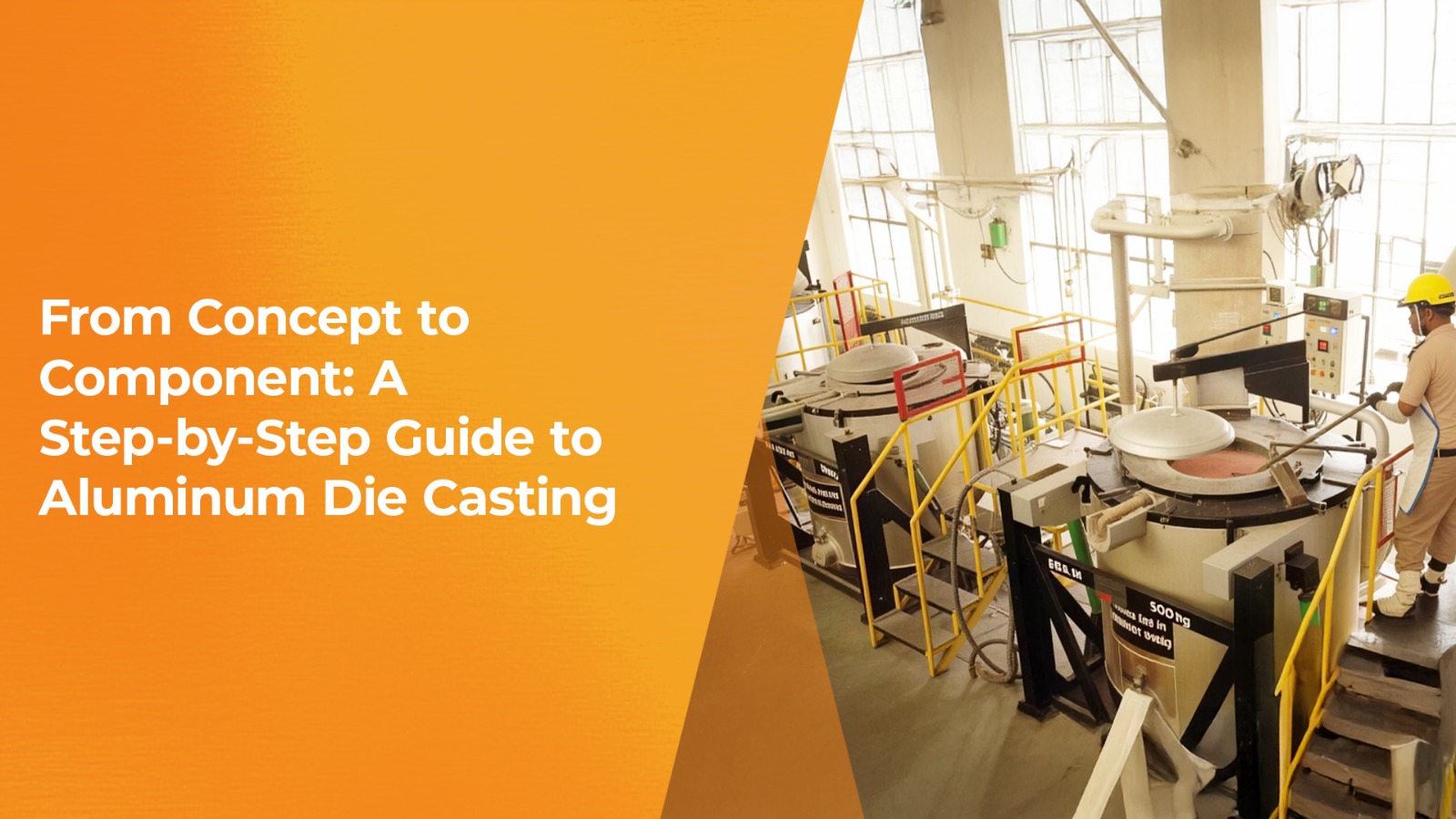
From Concept to Component: A Step-by-Step Guide to Aluminum Die Casting
Die Casting is a vital manufacturing process to manufacture accurately manufacturing complex metal components. Die casting is performed in various industries. Due to its high strength-to-weight ratio, high corrosion resistance, and flexibility, aluminium is the most widely used material for die casting. This guide will walk you through the entire process for manufacturing an aluminium part using the die-casting process. Through this guide, you will better understand how to manufacture high-quality aluminium die cast parts.
1. Understanding the Die Casting Process
The die casting process is where you manufacture aluminium die-cast parts. The die casting process is a method where the molten aluminium is injected into a steel die or mould under very high pressure. Because of these attributes, die-casting is very effective in making parts that have complex shapes, extremely close tolerances, and repeatability. Many everyday products, including various automotive components, as well as many electronic enclosures, are manufactured using die-casting methods.
Key Steps in the Die Casting Process:
Mould Design and Preparation. The first step in the die casting process is to design the die or mould, which contains the intricate detail of the finished part. This requires skilled engineers who have experience designing dies for the die casting process. Additionally, the engineers must consider how to make the die survive the extreme pressure and heat encountered during the die casting process.
Melting the Aluminium: Melted aluminium is injected into the prepared die under high-pressure conditions to all areas of the die in a speedy and precise way.
Injection of Molten Aluminium: Once the aluminium is ready, it is injected into the die cavity under extreme pressure, filling the mould quickly and accurately.
Cooling and Ejection: The molten aluminium quickly fills all cavities of the die; as the aluminium cools, the part forms according to the requirements of the die, and the part is finished. The part is removed from the die using either a hydraulic or mechanical system.
Post-Casting Finishing: The part that has been cast will then go through finishing processes such as trimming, sanding, and treating the exterior of the aluminium part to ensure it meets the required specifications and functions adequately.
2. The Role of Aluminium in Casting
Aluminium is one of the most commonly used metals in die casting due to its lightweight and corrosion-resistant properties. The benefits of aluminium casting include its ability to create strong yet lightweight components that are ideal for a wide range of applications, especially in industries where performance and weight are critical.
Advantages of Aluminium Die Castings
Lightweight: Aluminium is so light that companies that produce automobiles and aerospace manufacturers, where weight is critical, can reduce the total weight of their products significantly by using aluminium in place of iron or other heavier metals.
Corrosion Resistant: Aluminium has a natural corrosion-resistant coating from when it is manufactured; therefore, aluminium die casts can be used in harsh environments.
Thermal and Electrical Conductivity: Aluminium is one of the most conductive metals available, which makes it the best for making electrical and electronic devices.
Cost-Effectiveness: Aluminium die casting is often more economical compared to other manufacturing processes like forging or machining.
The Aluminium Die Casting Manufacturing Steps
Aluminium die casting is a more cost-effective process than other manufacturing processes, such as machining and forging. The die casting process consists of nine manufacturing steps, which are clearly defined to allow the most accurate and efficient production of aluminium products. Each of these nine steps is outlined below, along with descriptions of how they lead to the successful creation of aluminium products.
Step 1: Casting Design
In this first step of the die casting process, the engineers create a strong and durable design for the part. To do so, the engineers must establish the part's geometry, dimensions and specifications to ensure that the part can be manufactured. Engineers must also be aware of the functionality of the part, its materials, and any potential difficulties during the manufacturing process. Engineers can also use sophisticated simulation software to simulate how the molten aluminium will flow into the mould and to analyze the potential for any design failures that could cause defected parts.
Key factors related to casting design include:
Wall Thickness: The thickness of the wall impacts both the flow of molten aluminium into the mould and the strength of the finished part.
Ribs and Bosses: These features provide additional strength and support; however, they must be designed with caution to prevent entrapped air or other issues leading to defects during casting.
Draft Angles: These angles are essential for an easy removal from the mould and to limit damage to the casted part.
Step 2: Mould Creation
Once the design of the component has been determined, a die or mould is created. A die/mould is made out of steel and can easily withstand extremely high temperatures and pressure when going through the die casting process. The die/mould must be designed to exact measurements so that the finished component will meet all of the specifications (including tolerances) required for the finished part. In many cases, a custom die/mould will be built for various components or assemblies.
Step 3: Melting & Injecting
Once the mould is prepared, the aluminium is melted in a furnace until it reaches the appropriate temperature. After the aluminium has melted, it will be injected into the mould at very high pressure, sometimes reaching several thousand psi, depending on the size and complexity of the part being made, thereby filling all voids in the die/mould completely and accurately reproducing all aspects of the design. This step is critical in achieving the levels of accuracy and consistency required in finishing all components.
Step 4: Cooling & Solidifying
Once the mould has been filled with molten aluminium, it must cool before the casting can be removed from the die/mould. This is done by cooling the aluminium until it solidifies in the shape of the die. The time it takes to cool and solidify can vary based on the thickness and complexity of the component; however, once the aluminium has been cooled adequately, the die will be opened, releasing the solidified part.
Step 5: Ejection and Finishing
Once cooled, the part is safely removed from the die/mould. After a die is cast, the post-cast finishing procedures must occur to remove any excess.
Cutting excess flash or material from the edges of the part/component.
Improve the surface texture/finish with sanding or polishing.
Shape and get the part precisely to the final dimensions via machining.
Add protective coating (resin paint) for added durability and improved appearance.
4. Quality Control in Aluminium Die Casting
Quality Control (QC) measures are in place during the complete manufacturing process to ensure the highest level of quality in the final components created by aluminium die casting, including:
Dimensional Inspections: Measure and compare the component dimensions to the original die design to ensure they are in accordance with specifications.
Material Testing: Check for defects in the material, such as porosity/cracks that may reduce the overall strength of the finished part.
Surface Quality: Inspect component surfaces for signs of defects such as roughness/contamination, etc.
Mechanical Testing: Measure physical properties such as Tensile Strength, Hardness and Fatigue Resistance.
5. Common Applications of Aluminium Die Casting
Numerous industries utilize aluminium die-casting, including Automotive, Aerospace and Electronics, with a few examples being:
Automotive – Engine Block, Transmission Housing and Structural Components.
The die casting process is an advanced method for manufacturing high-quality aluminium components. From casting design to component production, every step in the aluminium casting process is crucial to ensure that the final part meets the required specifications. By following these steps and incorporating rigorous quality control measures, manufacturers can produce durable and high-performance components suitable for various industries. Understanding each stage of the process helps businesses optimize their production and create cost-effective solutions that meet customer needs.